
Diode laser wavelength explained for UK clinics: what 810nm, 1064nm and triple wavelength mean for hair removal results.
Diode laser wavelength is the specific wavelength of light a semiconductor diode laser is tuned to emit for hair removal. For diode laser hair removal, 810nm is the established reference wavelength, chosen to target melanin in the hair follicle while minimising absorption by surrounding tissue.
We are Skyncare, the UK's laser experts and the first choice for UK colleges. We provide innovative, market-leading, medical-grade technology for aesthetic clinics, backed by comprehensive training and unrivalled customer-focused support.
Why wavelength matters for diode laser hair removal
Successful laser hair removal is built on selective photothermolysis. In simple terms, this means delivering light energy that is selectively absorbed by the intended target — the melanin within the hair follicle — while minimising absorption by surrounding tissue.
When the laser targets melanin in the hair shaft, that light is converted into heat, and that heat travels down the follicle to damage the structures that produce new hair. To damage those structures, temperatures generally need to reach approximately 60–70°C, while minimising absorption by surrounding tissue.
That is why wavelength selection, treatment parameters, cooling and practitioner judgement matter more than headline power. Results build over a course of treatments, and realistic consultation and settings are part of safe, effective care.
What is the diode laser wavelength range?
A diode laser is a semiconductor-based laser that can be electronically tuned to emit a specific wavelength of light. Unlike solid-state lasers such as Nd:YAG (1064nm) and Alexandrite (755nm) — which are limited by the physical properties of their lasing medium — diode technology allows manufacturers to engineer the wavelength more precisely.
This flexibility enables optimisation specifically for laser hair removal, rather than adapting technology originally designed for other medical purposes. So there is no single diode laser wavelength range to memorise. The right question for a clinic is what wavelength the system is tuned to, what skin and hair types you treat most often, and how wavelength works with parameters, cooling and training.
For background on power, cooling and specification, see The Truth About Diode Lasers.
What does 810nm mean for laser hair removal?
810nm is the reference diode laser hair removal wavelength for UK clinics. Our knowledge base work on diode lasers centres on the science behind this 810nm wavelength, alongside cooling, power specs and shot life.
In practice, 810nm means the diode is tuned to a wavelength with strong absorption by follicular melanin and lower competing absorption by surrounding tissue. That balance is what allows a trained practitioner to build heat in the follicle to the 60–70°C range needed for follicle damage, using appropriate fluence, pulse duration, cooling and technique.
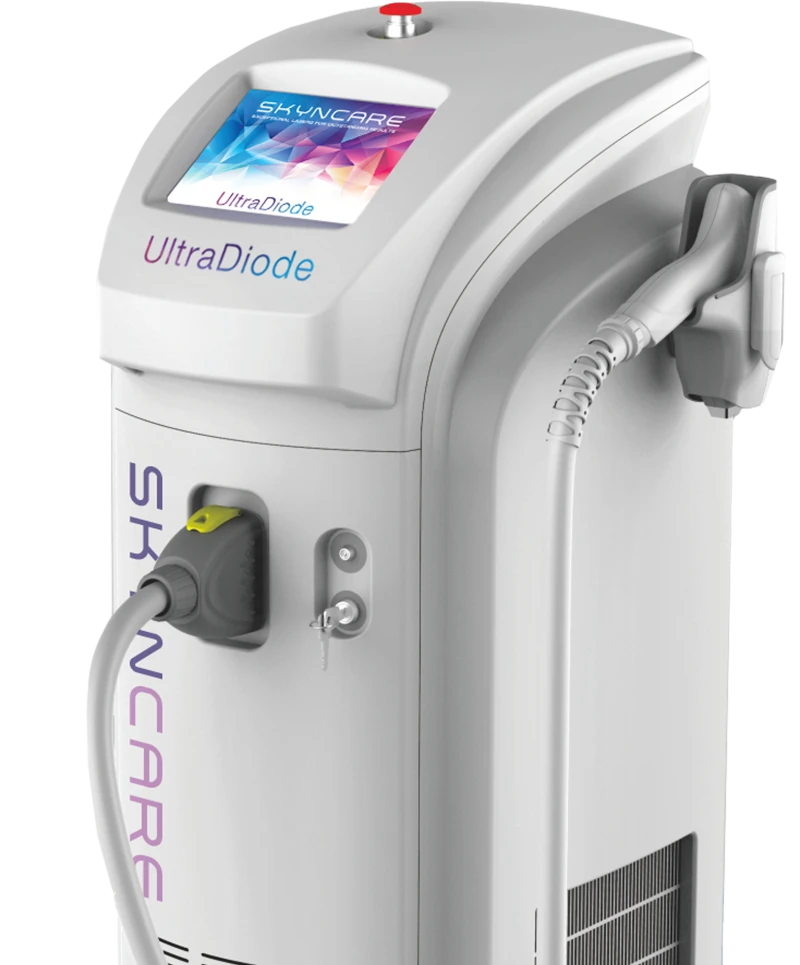
An example is UltraDiode, our medical diode laser with UHD technology for ultra-fast, pain free hair removal treatments. As with any system, 810nm alone does not guarantee results — consistent output, contact cooling, clinical settings and practitioner skill decide the outcome.
What is a 1064nm diode laser?
1064nm is best known as the Nd:YAG wavelength. When you see 1064nm listed on a diode laser hair removal machine, it means the diode source is engineered to emit at that same 1064nm wavelength, rather than at the 810nm diode reference.
Clinics usually ask about 1064nm because they treat a wide mix of clients and want a wavelength option associated with deeper-penetrating Nd:YAG treatments. Whether you need it depends on the skin types, hair types and body areas you treat most often, and on how the manufacturer balances wavelength with cooling, spot size, repetition rate and clinical protocols.
Ask the supplier what 1064nm adds on that specific platform, which cases it is indicated for in their training, and what evidence of consistent results they can show.
What is triple wavelength?
Triple wavelength is used to mean a diode handpiece or platform that can deliver three laser hair removal wavelengths, rather than a single tuned wavelength. It is often described using familiar references such as 755nm, 810nm and 1064nm known from Alexandrite, diode and Nd:YAG practice.
The idea is to give the practitioner more options across different hair and skin presentations without changing machine. In reality, having three wavelengths only helps if each wavelength delivers calibrated energy, cooling keeps the skin protected, and the team is trained to select the right combination of wavelength, fluence and pulse for each client.
Do not choose on wavelength count alone. Compare measured output, cooling comfort, ease of use in a busy clinic, training depth and after-sales support.
What should clinics check besides wavelength?
Wavelength starts the conversation, but results come from the whole system and the support behind it.
- Wavelength fitConfirm the system suits the hair and skin types you treat most often, not just a headline wavelength.
- Cooling comfortCheck active skin cooling and real-time comfort, which support safe delivery at effective settings.
- Training includedChoose accredited, in-person practical training with protocols your team can follow confidently.
- Support packageLook for unrivalled customer-focused support, servicing and marketing help to build a reputation for results.
With over a decade in business, more than 1 million treatments delivered and a 5 star Google rating, we help clinics choose technology for reputation and results.
Speak to our team to find the right system for your clinic.
Talk to Skyncare
Have a question about your situation? Get in touch with Skyncare.
Compare all products