
How diode laser works and diode laser settings for hair removal, explained for UK clinics.
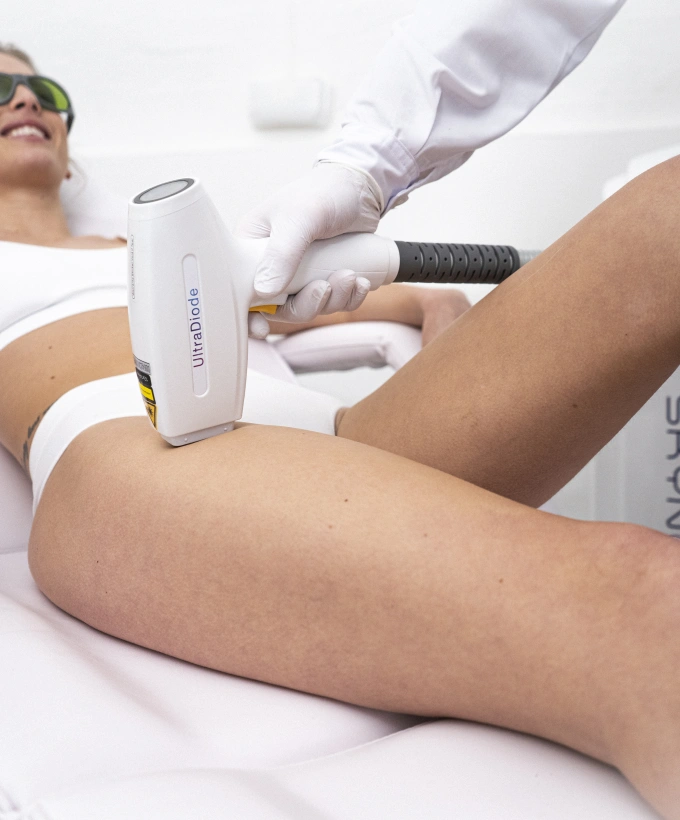
Yes — diode laser hair removal works when the right wavelength, parameters and cooling are used by a trained practitioner. If you are comparing a diode laser for your UK clinic, start with what the machine has to do for your business, not just the handpiece.
We are Skyncare, the UK’s laser experts and the first choice for UK colleges. We provide innovative, market-leading, medical-grade technology for aesthetic clinics, backed by comprehensive training and unrivalled customer-focused support.
What is a diode laser?
A diode laser is a semiconductor-based laser that can be electronically tuned to emit a specific wavelength of light. That flexibility enables optimisation specifically for laser hair removal, rather than using a general light source for many jobs.
In clinic practice, a diode system is a mains-powered, medical-grade system designed for use by trained practitioners. Professional systems are built for repeated daily use, with practitioner control over parameters, cooling and safety, plus ongoing servicing and training. That build quality and support matter more than headline power when you compare options.
Our UltraDiode is a medical diode laser with UHD™ technology for ultra-fast, pain free hair removal treatments.
How does diode laser hair removal work?
Diode laser hair removal works through selective photothermolysis. The laser targets melanin in the hair shaft, that light is converted into heat, and that heat travels down the follicle to damage the structures that produce new hair.
To damage those structures, temperatures generally need to reach approximately 60–70°C, while minimising absorption by surrounding tissue. That is why wavelength selection, treatment parameters, cooling and practitioner judgement matter more than headline power.
Hair grows in cycles, so results build over a course of treatments to catch more follicles at a responsive stage. Realistic consultation and settings are part of safe, effective care.
Is a diode laser good for hair removal?
For most hair-removal focused clinics, yes. A diode laser tuned for hair removal can deliver consistent hair-removal results when it suits the clients you treat most often and comes with the training and support to run it safely and profitably.
It is effective when the right wavelength, parameters and cooling are used by a trained practitioner. With over a decade in business, more than 1 million treatments delivered and a 5 star Google rating, we help clinics choose technology for reputation and results. Learn what 810nm, 1064nm and triple wavelength mean before you choose.
What to check before you set parameters
Safe diode laser settings for hair removal start with assessment, not numbers. Check these four points during every consultation and test patch, following your training and manufacturer guidance.
- Skin and hairRecord skin type, hair colour and thickness, and treatment area to guide wavelength and starting point.
- Wavelength choiceConfirm the wavelength suits the client in front of you, as selection affects melanin absorption and safety.
- Cooling and comfortCheck contact cooling is working and comfortable, as cooling helps protect surrounding tissue.
- Training and supportOnly treat within your training and competence, with access to clinical support when unsure.
How do you choose diode laser settings for hair removal?
There is no single setting that suits every client. Use your training, protocols and manufacturer guidance to set a safe starting point, then adjust with practitioner judgement. Follow these steps in order:
- Consult and assess the client and record skin type, hair, medical history and expectations, so you have a clear baseline for safe settings.
- Select the wavelength for that client following your protocol, so energy is directed at follicular melanin while surrounding tissue is spared.
- Set conservative starting fluence, pulse and frequency for that skin, hair and area, so you stay within training before any adjustment.
- Confirm cooling and deliver a test patch, so you see how skin responds before a full treatment.
- Treat with steady coverage, consistent contact and overlap control, so heat builds evenly to the target temperature.
- Record final settings, response and aftercare, and plan the course, so next visits build results safely and calibration stays correct with servicing at least once every 12 months.
Once settings make sense, compare which diode laser model best fits your clinic before you buy.
Chat with our team to find the right system for your clinic.
Talk to Skyncare
Have a question about your situation? Get in touch with Skyncare.
Compare all products